Turtles in Ottawa Region

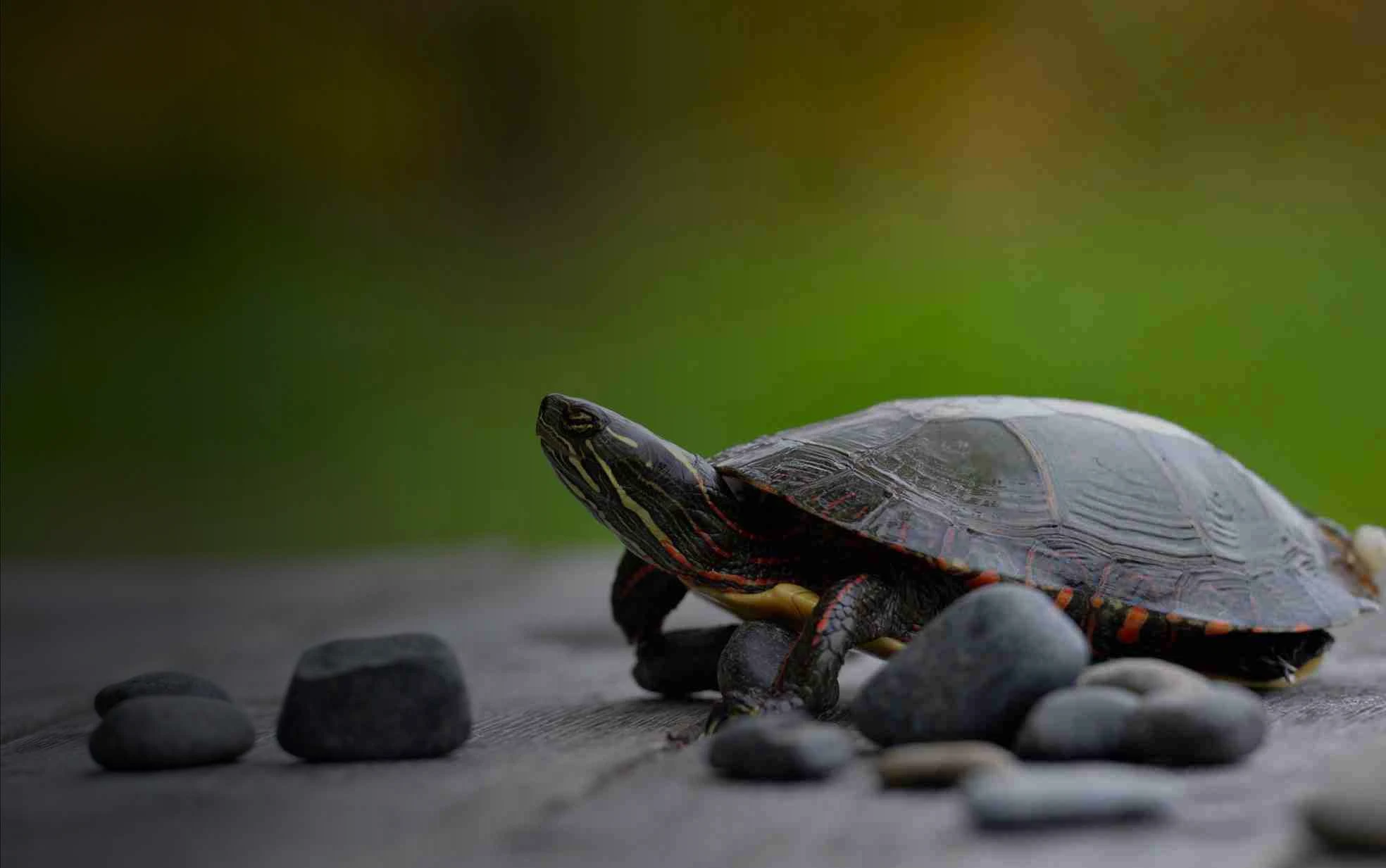
Ontario is home to eight species of turtles, all of which are on the Species at Risk list. The three most common turtle species in the Ottawa region are the Painted, Snapping and Blanding’s.

Help a Turtle Across the Road

Many of the turtles hit by cars are adult females on their way to lay eggs on dry land and June is the height of nesting season. Males also cross roads to reach other habitats.

You can help an uninjured turtle across the road in the direction it is heading. Most Ontario turtle species can be carefully picked up with two hands and moved across the road. You can also use a board or shovel to coax it along. Never pick up a turtle by the tail, which could damage its spine.

Be careful helping a snapping turtle across the road – keep a safe distance from its head as it can reach past the midpoint of its shell if it feels threatened. You can identify a snapping turtle by the large black, olive or brown shells typically covered in algae. Their tails have “dinosaur-like” triangular crests along their length. The video below shows different ways to help a snapping turtle across the road. With all eight of Ontario’s turtle species at risk, saving even one turtle can make a difference.

When to Rescue

Eggs

In Ontario, it is illegal to disturb or interfere with turtle nests. If you accidentally uncover a nest of turtle eggs, please leave them where you found them and cover them back up with the nesting material. If the eggs are disturbed, they may not survive. However, you are allowed to install a turtle nest protector on your land.

If you think a nest is in a dangerous place (e.g. where it can get walked or driven on), send an email to info@rideauwildlife.org with a photo of the nest, exact location (you can drop a pin in Google maps by zooming in and holding your finger on the location, then share it) and your phone number.

Hatchlings and Adults

Turtle hatchlings are born on dry land and find their way to the nearest water source. They are about the size of a loonie and are completely independent. If it does not show signs of needing rescue, it will find its way to the closest water body.

Signs that a turtle needs rescuing include:

  • unresponsiveness (it’s hard to determine when a turtle has passed away so err on the side of caution)
  • any head or limb injuries, or cracks to its carapace (upper shell), plastron (lower shell) or bridge (shell joining the carapace and plastron)
  • a turtle found upside down and unable to right itself, which may indicate dehydration and overheating
  • any turtle found from November to April, as they should be hibernating

Turtle Temporary Care Instructions

If you have found an injured turtle, take these steps until you contact a wildlife rehabilitator for advice.

  • Most turtles can be safely picked up using two hands at the back of their shell. However, snapping turtles can cause severe injuries if handled incorrectly. Keep away from their head as they can snap if they feel threatened. You can use a board or shovel to move the turtle. If you have to handle a snapping turtle, you can hold the back of its shell with one hand and slide your other hand underneath.
  • Place the turtle on a damp towel in a well ventilated plastic bin with a secure lid. Do not provide any food or water.
  • Keep the container in a dark, quiet place away from people and pets. Do not provided an added heat source for turtles. Please do not cause unnecessary stress by handling, talking to or peeking at the animal.
  • To reduce stress during transportation, please turn the radio off and leave your children and pets at home.